

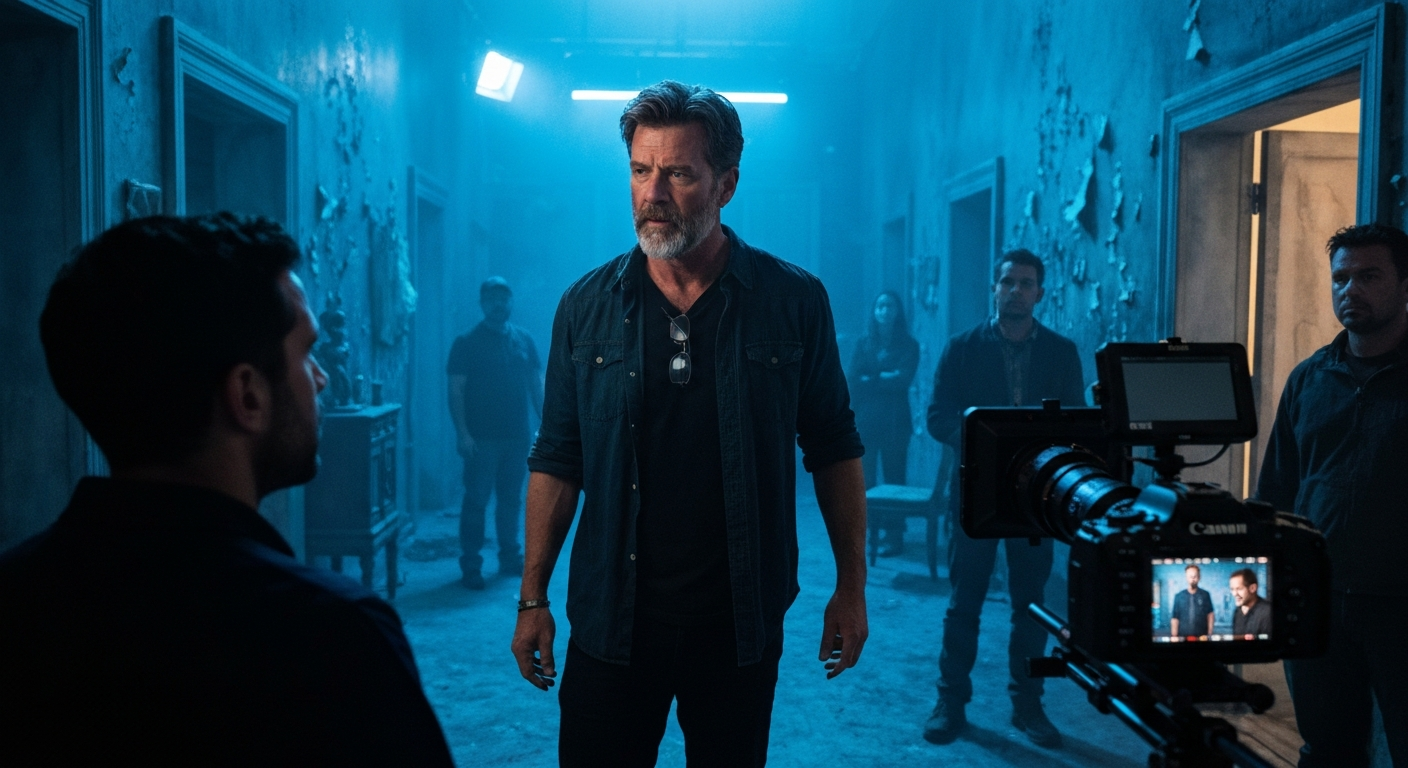
In a gaming landscape often dominated by sequels and franchises, Kane Parsons, the 20-year-old director behind the upcoming film Backrooms, is making headlines not just for his cinematic vision but also for his refreshing perspective on the gaming industry. As one of the most anticipated films of 2026, Backrooms draws inspiration from a popular internet horror concept, and Parsons is keen to highlight the integrity of some of the gaming giants. Recently, he took the time to praise Valve, the renowned developer and publisher, for their steadfast commitment to quality over quantity, particularly in the realm of sequels.
Valve, known for its groundbreaking titles like Half-Life, Portal, and Counter-Strike, has cultivated a reputation for prioritizing innovation. In an age where many studios seem content to churn out sequel after sequel, often motivated by potential profits rather than artistic integrity, Valve’s approach stands out. “[Valve] understands that gaming is an art form,” Parsons stated during a recent interview. “They don’t just throw out sequels to capitalize on popularity. Instead, they focus on refining their craft and delivering experiences that resonate with players.”
This perspective resonates deeply with Parsons, whose film draws heavily on immersive storytelling and atmospheric tension — elements that also define great gaming experiences. The connection between video games and film has become increasingly pronounced, especially as games evolve into narratives that captivate audiences beyond traditional gameplay mechanics. With the popularity of the Backrooms concept, Parsons has skillfully bridged these worlds, aiming for a cinematic experience that mirrors the emotional engagement found in the best video games.
In an era dominated by monetization strategies and microtransactions, Parsons believes that Valve’s integrity serves as a beacon for other developers. “When you look at Valve, you see a company that refuses to compromise its creative vision,” he shared. “They invest in their projects and take the time needed to ensure that what they release is not only fun but also meaningful.” It’s a sentiment that many gamers and creators can rally around, especially as they witness the pitfalls of franchises that prioritize profit over passion.
The Backrooms movie itself is a testament to Parsons’ vision of creating an immersive experience that isn’t just about thrills but also about invoking genuine emotional responses. Taking inspiration from the unsettling and often claustrophobic nature of the Backrooms, the film is set to explore themes of isolation, fear, and the unknown. By acknowledging his admiration for Valve’s creative philosophy, Parsons underscores his commitment to a similar standard in filmmaking.
Parsons also touched on the importance of originality in both gaming and film, emphasizing that true innovation stems from fresh ideas rather than rehashing old ones. “The best stories are often the ones that take risks and venture into uncharted territory,” he remarked. This is particularly relevant in today’s gaming landscape, where titles often feel like carbon copies of one another. Valve’s reluctance to pump out sequels indiscriminately is a refreshing reminder that quality storytelling should always take precedence over market trends.
Looking ahead, the success of Backrooms could pave the way for a new generation of filmmakers who prioritize storytelling and originality. Parsons hopes to inspire fellow creators to take a page from Valve’s playbook, advocating for a creative process that favors depth, narrative, and emotional resonance over simple commercial gain. “If we can create art that moves people and encourages dialogue, then we’ve succeeded,” he stated passionately.
As we await the release of Backrooms, one can only hope that Parsons’ vision translates into a compelling film that echoes the principles he so fervently admires in Valve. The intersection of gaming and cinema continues to blur, offering exciting opportunities for storytelling that transcend traditional boundaries. Perhaps, if more creators adopted Valve’s ethos, we could witness a transformative shift in how stories are told—both in games and on the big screen.
In conclusion, Kane Parsons’ praise for Valve’s integrity serves as a reminder that in both gaming and film, true artistry thrives when creators remain committed to their vision. As we move into an era where sequels are often the norm, let’s support and celebrate those who dare to innovate and inspire, much like Parsons and his upcoming film Backrooms.